
My reconciliation journey
I was recently asked by a prospective client (a non-profit partnering with First Nations) how I got started in working with Indigenous communities. As I gave my long, rambling answer I realized that it has actually been a long road now, with many supportive teachers along the way, and it’s a journey I’m very grateful for. I’d like to share my story, both for transparency and in the hope it might show a path for others in my shoes.
Rooted in a desire for justice
My education through the 90s and early 2000s did not equip me well to understand Indigenous peoples in Canada. I first encountered a true understanding when I was in graduate school in Montreal in 2016. A memory I will never forget was the killing of Colten Boushie and the heartbreak I felt at this news. I was drawn to attend a gathering to mourn, honour and advocate for him. Hearing the songs, drumming, and voices of Indigenous community members awoke something in me. There was a serious injustice here, and I so deeply felt it and wanted to contribute to a change. From then on, I strove to learn as much as I could.
The more I learned, the more ashamed I was of my lack of knowledge. The feelings of guilt and shame are normal for Canadians like myself - white, descended from settlers, unsure how much damage my own family has caused in being here. There was an emotional process, but I quickly understood from the Indigenous advocates around me that dwelling and ruminating in these feelings for too long could paralyze me from making meaningful changes that would actually help the situation.
Mistakes and first steps
So I looked for opportunities wherever I could. I had a chance to attend a workshop on the theme of bringing together western science and Indigenous knowledge in Montreal, and this showed me many ways things could be done better in my world of ecological research.
At the time I was studying insects called wētā in New Zealand, so I learned some of the Māori words relating to my research and incorporated them into my writing to acknowledge and honour the original names of these places and creatures. I learned the Māori concept of taonga species (ecologically sacred “treasures,” of which wētā are one) after I had already been in the field and taken samples. I felt ashamed for not knowing better, for taking wētā from the land without permission. And I vowed that if I continued in research, I would never do it that way again, and I would look for mentors who shared these values and who could help me do things in a culturally respectful way.
After I finished graduate school, I started working at Fuse Consulting Ltd. We did not have any Indigenous clients at the time, but I wanted to be prepared for that possibility and to be sure we could do things in a right way. I proposed to my managers that we could hire a training session from Indigenous Corporate Training Inc., and they said they could support it if I recruited other companies to be involved. So I got a few other companies signed up, and we held the training. At that stage in my journey, I understood it to be important to involve Indigenous vendors whenever possible, so we held the training at the Yellowhead Tribal College and ordered catering from an Indigenous-owned restaurant.
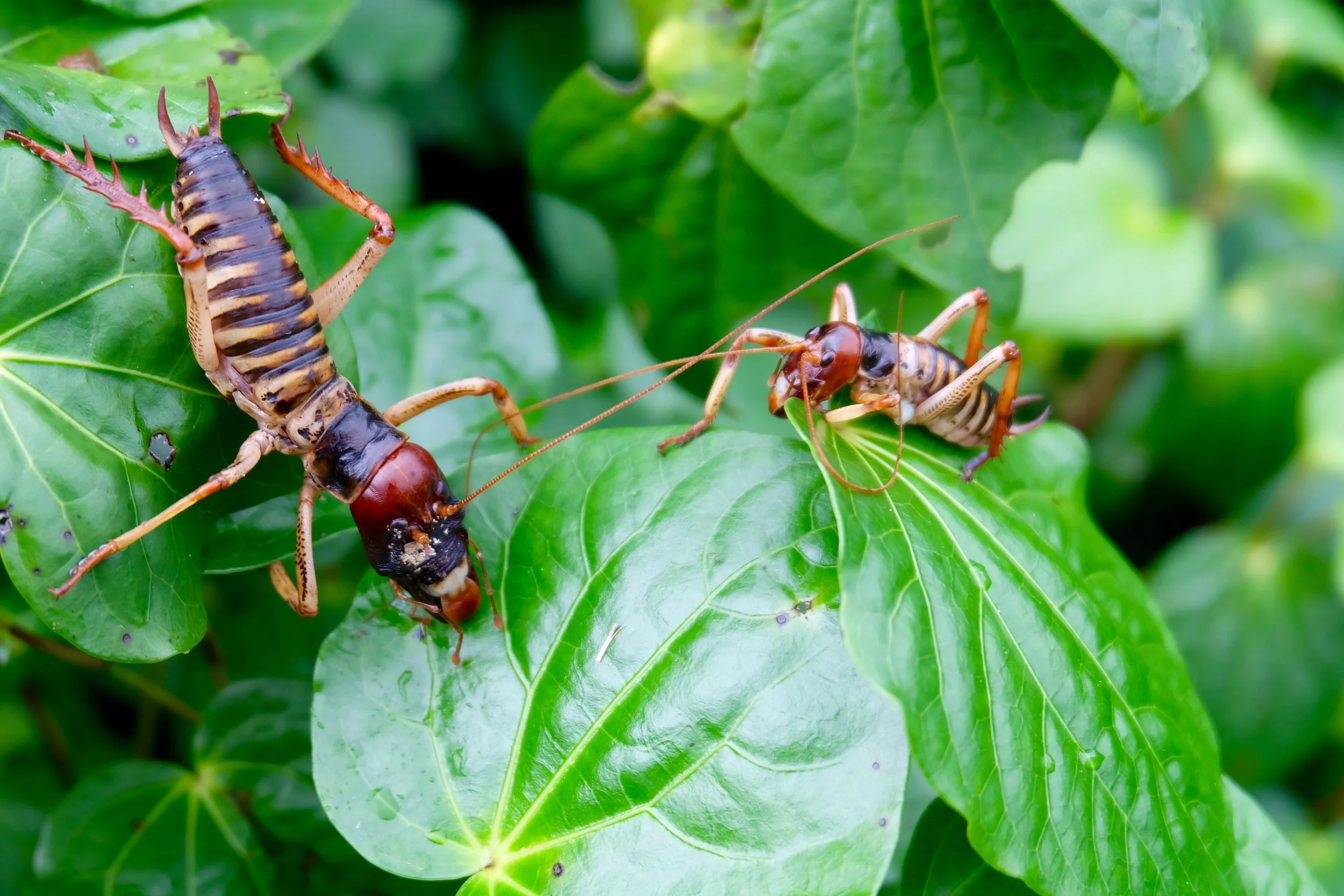
Two male Wellington tree wētā photographed on Maud Island, Aotearoa.
Finding allies
After I finished my job at Fuse, I wanted to find a next workplace that saw this issue of reconciliation the same way I did: it needed to be inherent to our work, it needed to be incorporated in the way we do things. I wanted to find an organization that saw it as imperative.
And I was really lucky to find that place: the Canadian Parks and Wilderness Society Northern Alberta Chapter (CPAWS NAB). There, I was fully supported to continue my learning journey and to make some of my own initiatives for raising awareness of the importance of Indigenous-led conservation, including a blog series highlighting Indigenous Protected and Conserved Areas (IPCAs). It was a small contribution, but I was so happy to have something in my work that shone a light on Indigenous land and water stewardship. This work felt true to my values of bringing together environmental and social justice.
Through CPAWS NAB’s collaborative work with Dene Tha’ First Nation, I also had the opportunity to support a report summarizing the benefits of creating an IPCA in the Bistcho Lake area. This was my first work directly with a First Nation group, and I was so grateful to have the support of my CPAWS NAB colleagues and the good relationship they had already built. I got to learn a lot about the land and life ways from the Dene Tha’ representatives and it started to show me firsthand how deep these relationships to the land and water run in Indigenous cultures. I felt a deep appreciation for this view of the world that resonated so deeply for me.
It was around this time that I launched Wapiti Studios, and I was grateful to be referred by my colleagues to many opportunities working with Indigenous people and communities. I believe my peers had seen how I functioned, understood my genuine investment in developing these relationships, and had trust in me to do things in a good way. I think when you are clear about your values and don’t shy away from expressing these, you find your people, and that values alignment is really one of the most powerful things that has always been a through line in my business and who I work with.
Deepening relationships
I let my values guide me in the employment I sought out going forward, and when I started at the Northern Forestry Centre (NoFC) (a research centre of the Canadian Forest Service) I knew I was joining an employer that was quite developed in its commitment and understanding of reconciliation. NoFC has an Elder-in-Residence, Elder Heather Poitras, who I was both intimidated and excited to meet.
I cannot ever express enough gratitude for all the teachings I have received from Elder Heather. To have the opportunity to learn from someone who is so giving and thoughtful in everything they share has been a true honour. Through attending and participating in ceremony, teachings, and artistic practices like beading, that imprint of Elder Heather’s giving heart and wise soul are on me forever.
Elder Heather also introduced me and my NoFC colleagues to many other Elders and Knowledge Keepers, who each have had their impact on me. From learning about plants and medicines from Kohkom Kathy Hamelin to understanding more about Inuit culture from Elder Edna Elias, I have been so fortunate for these gifts - and sometimes some stern teachings and corrections along the way!
During my time at NoFC, I also got to meet and work with Indigenous youth and colleagues. I learned a lot from my peers, and began to understand the complexities of inter-generational trauma and how that shows up in a very real way for my Indigenous friends in their 20s and 30s working alongside me. These friends taught me more about Indigenous history and contemporary realities; not always through “teaching” in the way you might think of it - as we became friends, it was just sharing, confiding, telling stories.
And many of these conversations were about how hard it is to be Indigenous in the federal public service. The quiet racism of federal policies, power dynamics, staffing practices, and cultural attitudes became so utterly obvious in my eyes when I saw how it directly impacted my friends. Again, the feeling of injustice stung.
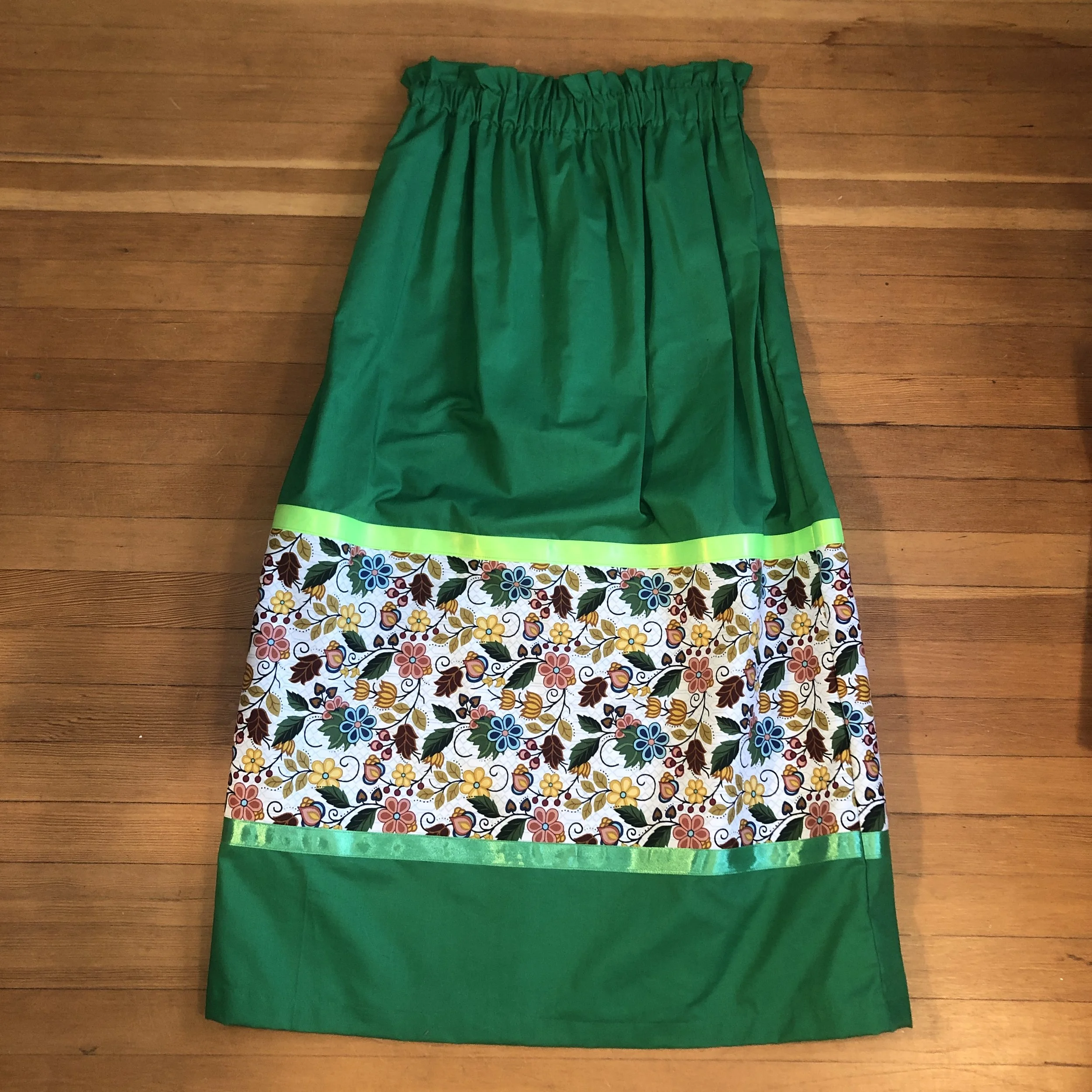
A ribbon skirt that Elder Heather Poitras made and gifted to me.
Reconcili-action: doing the real work
Luckily, the environment at NoFC empowered me to do more towards reconciliation than I had ever done before. In my position as the coordinator of our Speaker Series, I had the power to platform people and perspectives. I invited Indigenous speakers to come talk to us about their experiences, their projects, and their world views - and to challenge conventional western science approaches. One of the best talks in this series that I have to shout out specifically is the talk that Keara Lightning (University of Alberta PhD student) gave on restoring Indigenous ecologies (and defining prevailing attitudes in ecological research, including colonial “possessive” ecologies).
Myself and my Indigenous colleagues, including the brilliant Keyara Carifelle, also became a resource to help researchers develop relationships with communities. We were able to support them with cultural advice from Keyara and communications support from me. Illustrations, approachable slide decks, and visual plain language 1-pagers are incredible tools in this regard, and I really enjoyed being able to facilitate communication and translate the science for other groups. More than once, I think our help seeded a relationship that otherwise would not have found its footing!
And the biggest grind of all was internal advocacy to change policy and make it easier for us to work with Elders, Knowledge Keepers, and communities. The number of barriers to this kind of collaboration in the federal public service cannot be over-stated, and my experience really demonstrated to me that the Government of Canada is not structurally ready for reconciliation at this time (a capacity gap that Indigenous peoples have pointed out).
It is really hard to say whether you have had a “win” in this regard, but I know me and my manager banged on that drum as much as we could, and we did start to see some inching changes. For one, it seems that we advocated enough about the federal student hiring process (which was always randomized, preventing us from hiring students directly from communities!) that they provided a new option in 2024 to allow us to hire students directly as long as we had a clear justification that met their criteria for exceptions (e.g., Indigenous hiring).
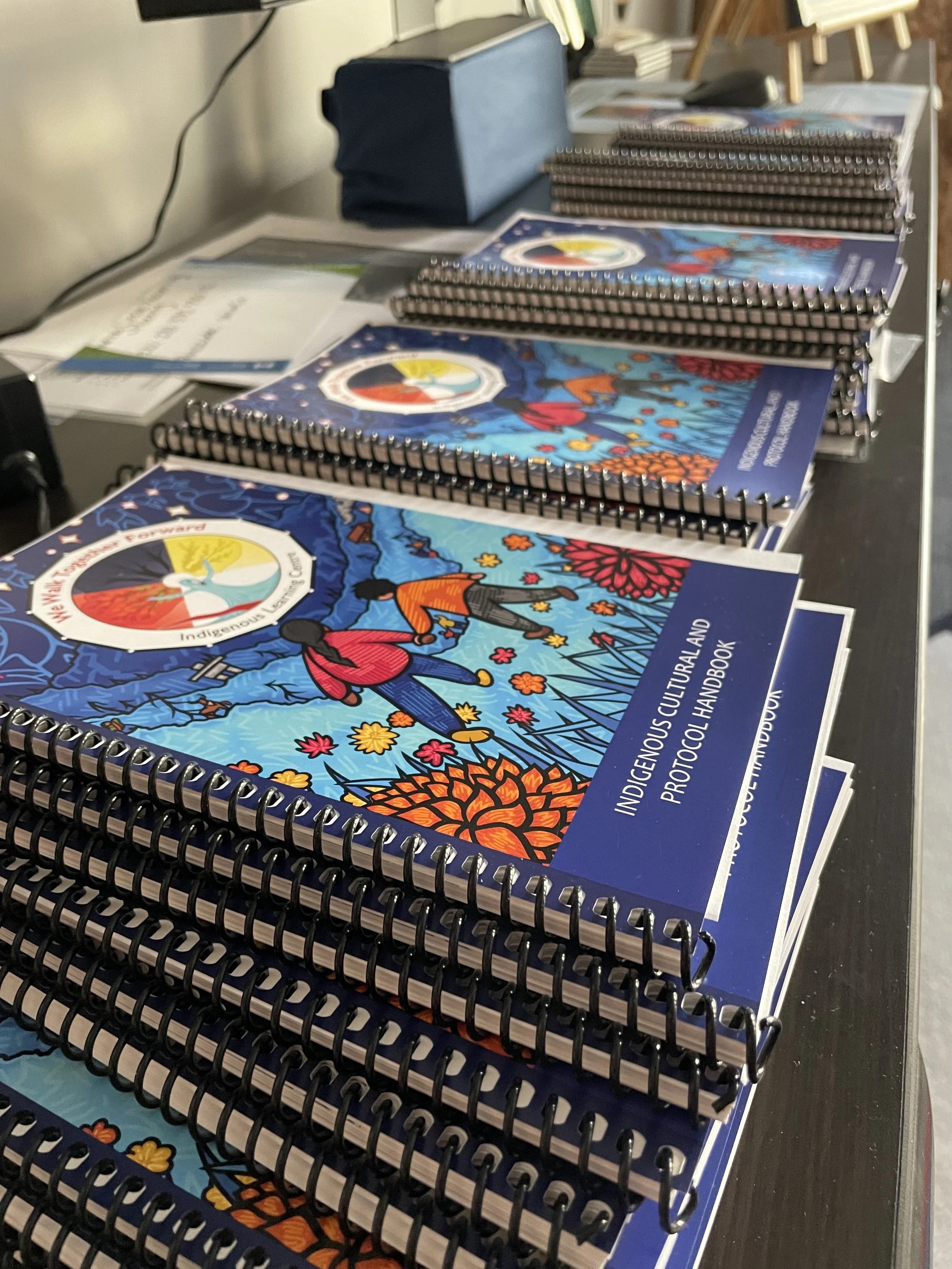
Indigenous Cultural and Protocol Handbooks, a project I completed collaboratively with Elder Heather Poitras and Kaylynn Goodrunning. Cover artwork by Jordan Twist, James Smith First Nation. These handbooks are now available for all staff at the Northern Forestry Centre to help guide them on their own reconciliation journeys.
Strong and steady
From here on out, as I return to my business at Wapiti Studios and bid my time at NoFC farewell, I remain steadfast in my values and my commitment to supporting Indigenous-led land and water stewardship. I see this as a time to buckle down and continue carrying forward what I’ve learned. It’s not time to waver, it is time to stay the course.
As someone who has advocated both inside and outside of government, I bring those perspectives with me into my work. I understand what we are up against, but I also know an incredible community of passionate people who are inching the dial every day.
And bringing together these knowledge systems is so exciting - we learn more, we see more, we understand more when we use multiple perspectives and sources of knowledge to examine an issue or discuss a topic. As a lifelong learner and an academic at heart, I think that is such a massive opportunity, and I almost feel sad for those who are missing out on it. Academics, scientists, researchers - we all got into this because we love to learn, because we have a fascination with the natural world. Why wouldn’t we want to keep learning? As Elder Heather has told me (I believe quoting another Elder), “If you stop learning, it just means you’re dead. I want to keep learning.”